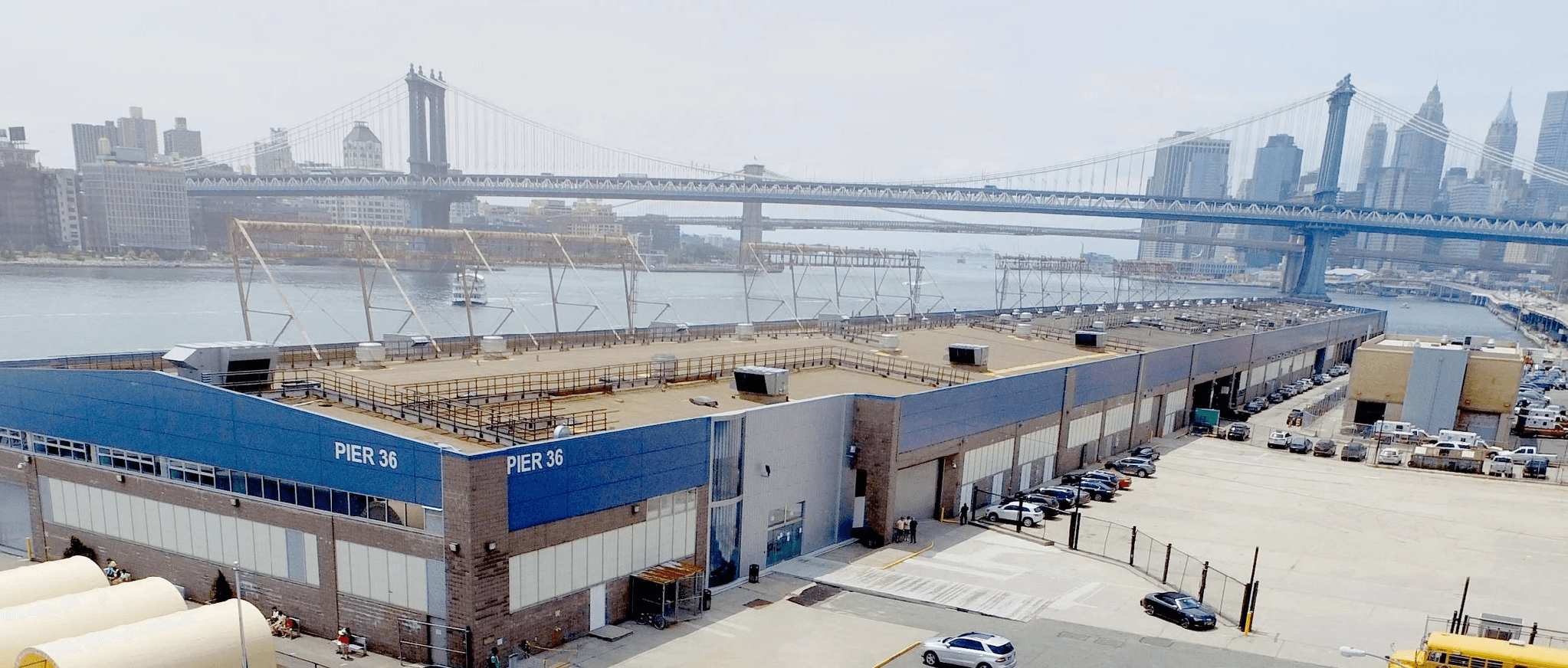
FiDi-Seaport Coastal Resilience Plan

What it is:
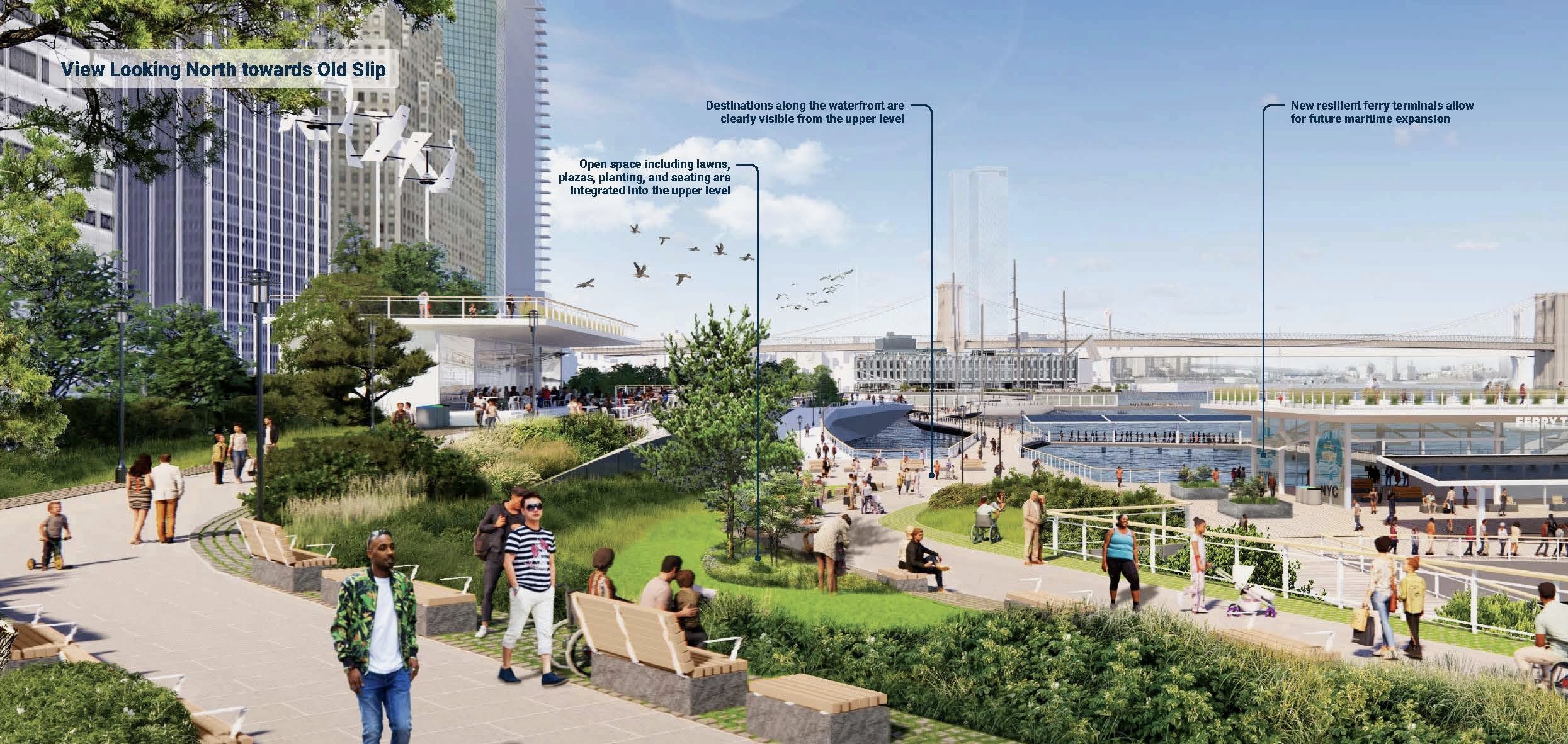
To respond to the impacts of flood and climate change, the City is proposing a plan for a resilient waterfront that will protect the community for years to come. This includes building new coastal flood defense and drainage infrastructure, ensuring accessibility and emergency vehicular connections, constructing facilities to support a variety of waterfront operations, preserving and enhancing existing areas, and creating a multi-level open waterfront space.
To function successfully, the plan will need to implement flood defense, stormwater management, easy access and circulation for people and vehicles, maritime usage, and public spaces, all while taking care to maintain or enhance the surrounding coastal ecology.
Why it matters:
A number of piers and waterfront buildings will be increasingly susceptible to sea level rise and flooding - if no action is taken, monthly tidal flooding will occur by the 2050s, and near daily flooding will occur by the 2080s. During heavy rainstorms, the current sewer system also does not always have enough capacity to manage both the stormwater and wastewater. When this occurs, the combined stormwater and wastewater flow will back up and flood onto streets and into basements instead of being discharged as intended.
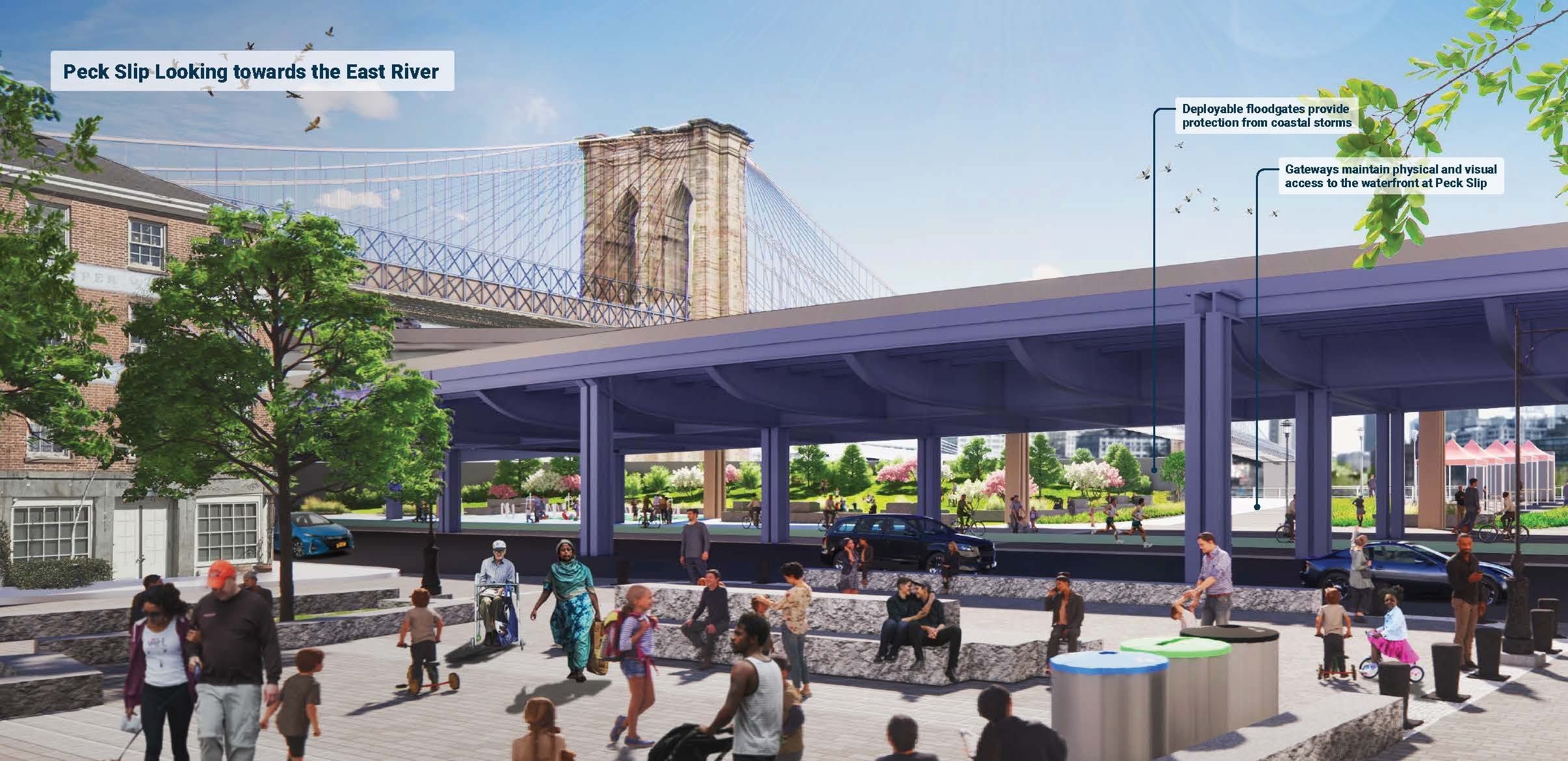
To maintain easily accessible connections to the surrounding neighborhoods and streets, waterfront access points need to be planned along the line of flood defense to avoid walling off the city from its waterfront.
Waterborne transportation across the city is a major part of the Lower Manhattan waterfront, and without effective safeguards, these operations will be more susceptible to flooding and may become increasingly disrupted. As this project will require extension into the East River, ensuring that the impact to aquatic habitats is also essential to a healthy, resilient waterfront.
Who it serves:
All people in and around lower Manhattan, including areas such as the Financial District, Seaport, the Two Bridges, and the surrounding areas.
What it could include:
A lower level flood defense that will protect the Lower Manhattan waterfront from future tidal flooding, permanently raising the shoreline 3 to 5 feet above today’s esplanade. This lower level will remain connected to the waterfront and maritime uses and will be floodable during larger storm events.
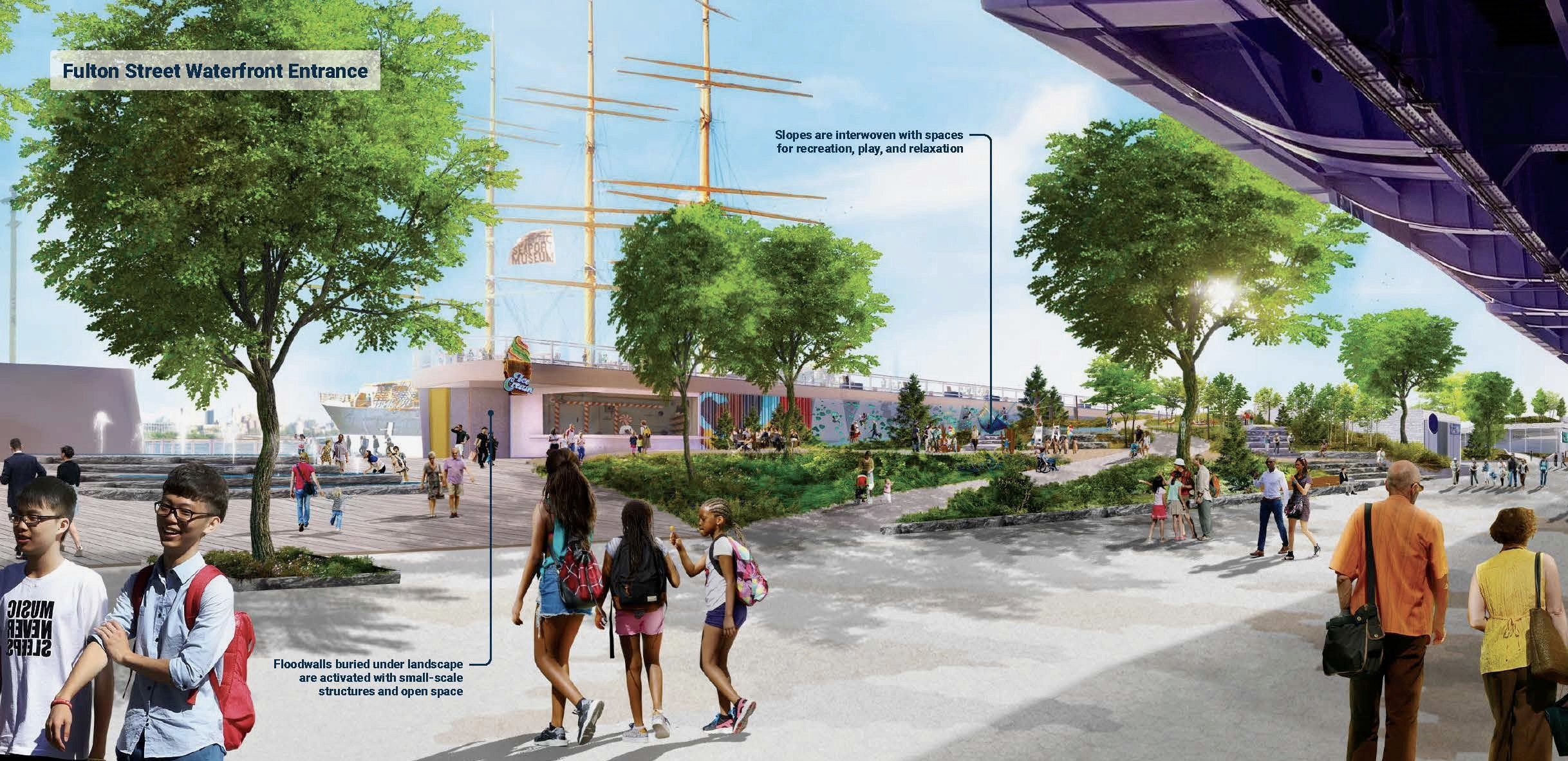
An upper level flood defense that will be 15 to 18 feet tall to protect against coastal storms and create a continuous high line of protection from The Battery to the Brooklyn Bridge. This will primarily comprise permanent floodwalls with space for universally accessible sloping pathways up and over the line of defense.
A new pump station, as well as additional pipes to help route water out effectively.
Green infrastructure, such as vegetated areas designed to capture stormwater runoff and permeable pavement, to manage smaller rain events before it enters the combined sewer system, lessening the stress on the sewer system.
Access points to the waterfront no more than 500 feet apart, combining gateway entrances, ADA compliant up-and-over access, and stairs and elevators where feasible.
Flood protection systems integrated into current piers and terminals, and the addition of two new ferry terminals to manage traffic more effectively.
Structured habitat for aquatic species, making space for shallow habitats, and ensuring light can reach these habitats.
BtoBC position:
Battery to Bridges Coalition strongly supports urgent coastal resilience for Lower Manhattan. This community has waited far too long since Hurricane Sandy for serious flood protection from storm surge, sea-level rise, and chronic flooding. The waterfront should not become only a flood wall with decoration on top - it should remain a working, civic, historic, educational, recreational, and maritime waterfront.
How residents can help:
Sign up for updates, stay informed on the plan’s progress, and advocate for a resilient waterfront that both provides flood protection and usable public space.

While the investment to realize the FiDi-Seaport Project is significant, the cost of inaction is higher. If this project is not implemented, the cumulative costs of flooding will cause a total of $20.3B in direct and indirect damages to the New York City metropolitan statistical area.
Other Initiatives